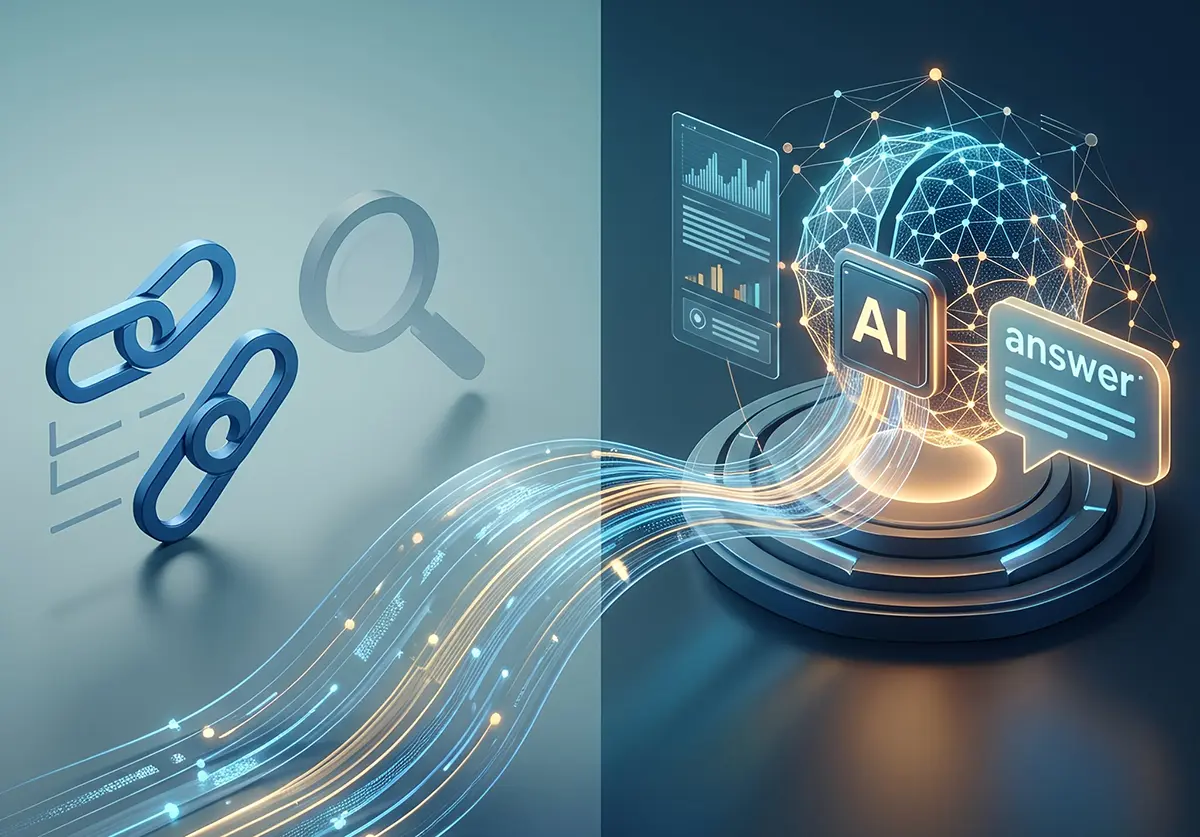
For decades, the digital marketing playbook was simple: optimize for keywords, build backlinks, and climb the Google Search results page. If you landed on page one, you won me. However, the ground has shifted. With the rapid integration of Large Language Models (LLMs) and AI-powered search engines, the way consumers discover brands has fundamentally changed.
At Pixel Effects, we are seeing a pivotal transition from Search Engine Optimization (SEO) to Generative Engine Optimization (GEO). While SEO-focused on ranking a website in a list of links, GEO focuses on becoming the definitive answer provided by an AI.
The Evolution of Discovery
Traditional search engines act as librarians, pointing you toward books that might have the answer. AI tools like ChatGPT, Claude, and Perplexity act as consultants. They synthesize information from across the web to provide a direct, conversational response.
When a consumer asks, “What is the most sustainable way to scale my cloud infrastructure?” they are no longer clicking through five different blogs. They are reading a single, AI-generated paragraph that summarizes the best solutions. If your brand isn’t part of that summary, you effectively don’t exist in that consumer’s journey.
Why SEO Alone is No Longer Sufficient
SEO was built for a world of “blue links.” It relies on high traffic volume and click-through rates. But “Zero-Click Searches” are on the rise.
- Information Synthesis: AI tools solve pain points immediately, meaning users don’t need to visit your site to get value.
- Conversational Context: Traditional keywords are being replaced by long-form, natural language queries.
- Brand Authority: AI models prioritize “citatability” and authoritative consensus over simple keyword density.
Defining a GEO Strategy
Generative Engine Optimization is the practice of making your brand’s data easily digestible, verifiable, and “authoritative” for AI models. It’s not about tricking an algorithm; it’s about becoming a trusted source for the machines that inform the humans.
Key Pillars of GEO:
- Direct Answer Optimization: Structure your content to answer specific “how-to” and “why” questions clearly and concisely.
- Citation Management: AI models often cite their sources. Ensuring your brand is mentioned across high-authority platforms (PR, industry journals, and reputable forums) increases the likelihood of being referenced.
- Structured Data and Schema: Use advanced technical markup to help AI crawlers understand the context, price, and utility of your solutions.
- Authoritative Content Clusters: Instead of chasing broad keywords, build deep “knowledge hubs” that establish your brand as a subject matter expert in a specific niche.
The Pixel Effects Perspective
The emergence of AI search isn’t a threat to brand awareness; it’s an opportunity for brands that act early. Consumers are using these tools because they provide a faster, more personalized path to solving their pain points.
To stay relevant, your brand must move beyond just being “searchable.” You must become “recommendable.” A robust GEO strategy ensures that when an AI engine synthesizes the world’s information, your solution is the one it presents to the user.
The era of the search engine is evolving. Is your brand ready for the generative age?
Written by Dan Trujillo | Chief Strategy Officer & Managing Director
Dan is a Brand Storyteller and Strategic Marketing Leader with a 29-year legacy in UI/UX design and digital strategy. He specializes in building high-conversion ecosystems that prioritize customer intent and clarity. Dan oversees the strategic direction for both Pixel Effects and Waste Wise Innovation, helping brands scale through creative intelligence and behavioral architecture.